
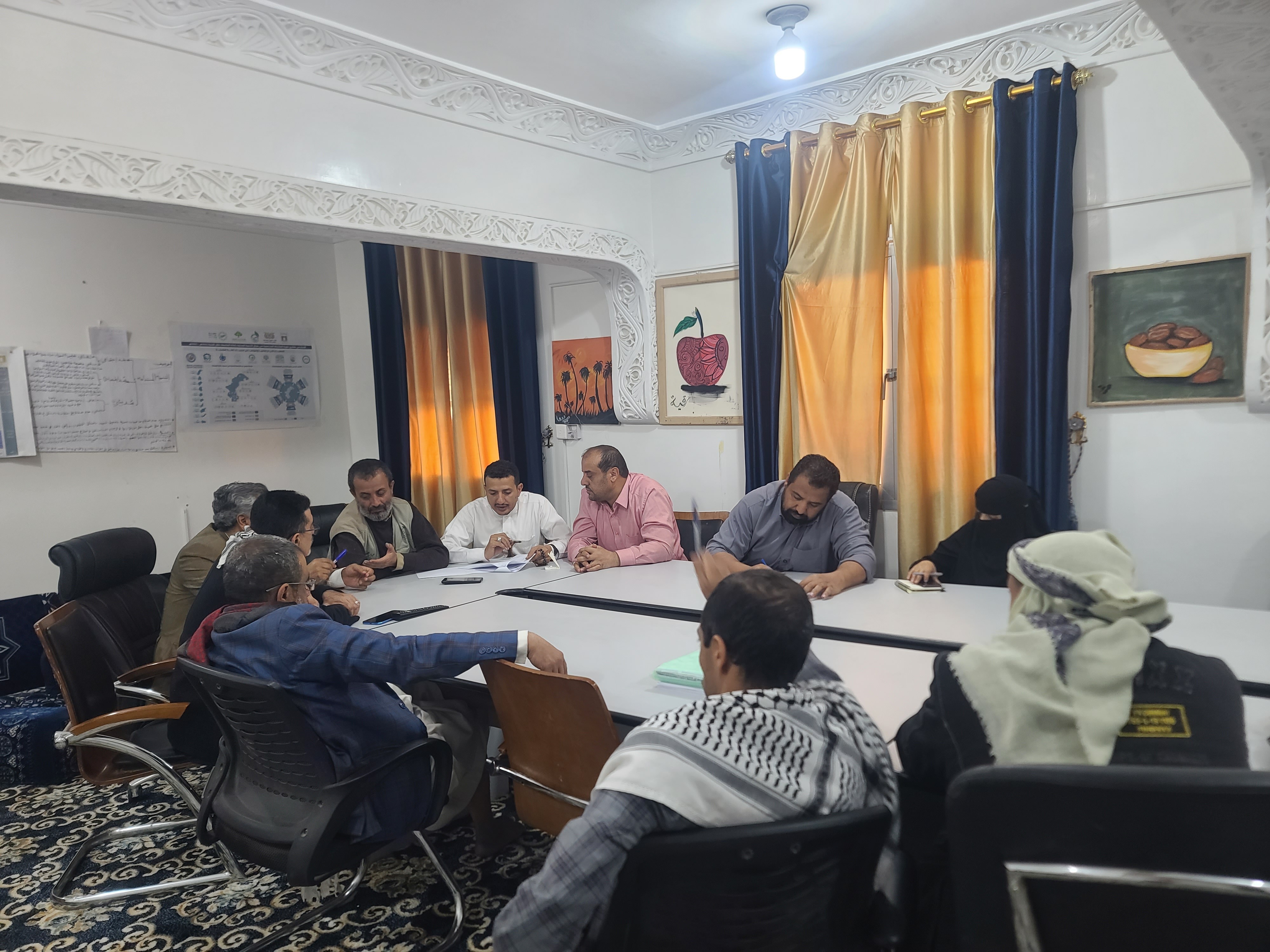
The Committee for Preparing and Drafting the Guide to Technical and Financial Procedures and Requirements for Project Financing Unit Projects and Agricultural and Fisheries Initiatives in the Capital Secretariat held its first meeting, within the framework of implementing the decision to form a specialized technical committee to prepare a comprehensive guide.
The Committee for Preparing and Drafting the Guide to the Technical and Financial Procedures and Requirements for Projects and Agricultural and Fisheries Projects and Initiatives Financing Unit Projects in the Capital Secretariat held its first meeting, within the framework of implementing the decision to form a specialized technical committee to prepare a comprehensive guide that regulates the procedural, technical and financial paths of the Unit’s projects and programmes, in a way that enhances the efficiency of planning, implementation and development sustainability.
The committee is headed by the Executive Director General of the Unit, Eng. Abdullah Sharaf El-Din, while the position of Vice Chairman of the Committee is held by the Executive Deputy Director General, Mr. Samir Ahmed Hamza, along with a number of technical and advisory leaders specialized in the fields of planning, projects, control, financing, economic empowerment, systems and information.
The preparation of the guide aims to establish a unified institutional framework that regulates the paths of typical and atypical development projects, and defines the technical and financial controls for economic empowerment programs and their implementation mechanisms in partnership with associations and development agencies, in addition to regulating policies for soft loans and revolving financing in a way that ensures the recovery of financial resources and their efficient recycling.
The guide also includes unifying technical requirements and specifications to ensure quality implementation and reduce financial waste, organizing mechanisms to support community and cooperative initiatives, designing a documentary cycle that can be automated within a unified information system, in addition to developing a proactive matrix to address faltering projects and financing, and adopting preferential evaluation criteria for partners who are most committed to technical standards.
According to the formation decision, the committee is responsible for preparing an integrated framework that covers the full cycle of projects, starting from study and planning, through implementation, operation, and sustainability, all the way to follow-up and measurement of development impact, including typical projects, non-traditional development projects, credit financing, community initiatives, media and marketing programs, and investment mechanisms.
The committee also works through specialized tracks that include procedural, legal, technical and engineering aspects, empowerment and loan policies, and financial and supervisory control, in addition to the track of measuring development impact through clear performance indicators that focus on the actual results of projects, such as increasing production and achieving self-sufficiency for beneficiary families.
The decision stipulates that the committee is committed to completing its tasks within a period not exceeding thirty days, according to specific time stages that include issuing an urgent version of the procedures for typical projects and existing financings, completing the standards for non-typical projects, and then holding a consultative workshop with representatives of cooperative societies and experts to review the guide before approving it in its final form.
The committee is scheduled to submit a final draft of the procedural guide classified according to work areas, in addition to an integrated appendix with technical, financial and administrative models, including application forms, feasibility studies, loan contracts and receipt records, in a way that enhances institutional governance and improves the efficiency of managing agricultural and fishery projects and initiatives in Sana’a.