
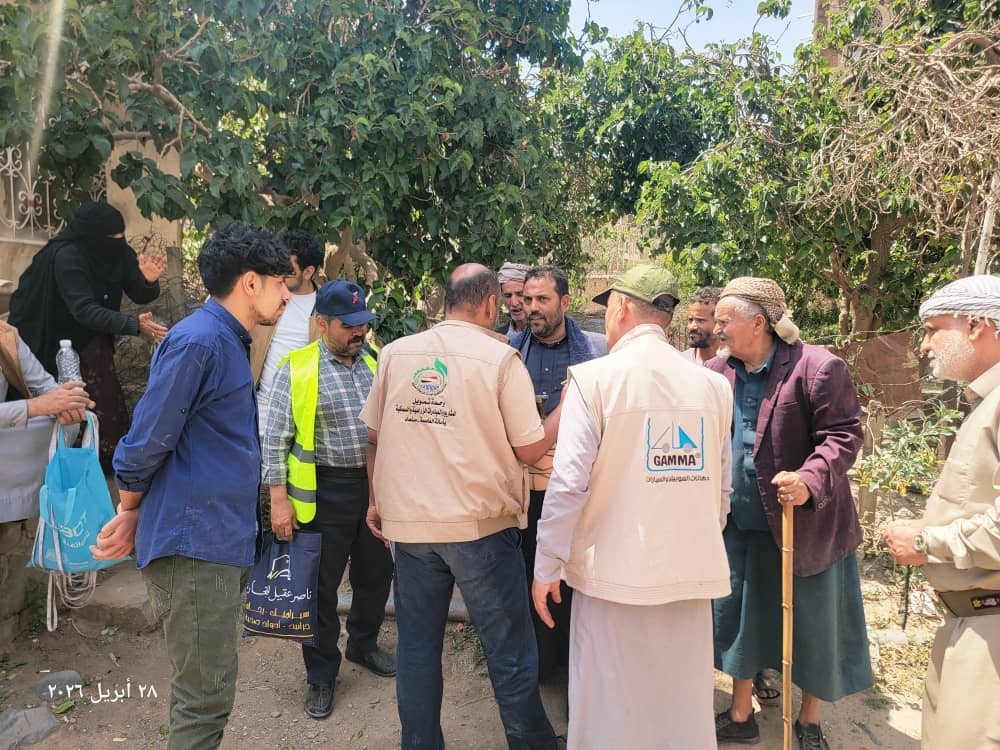
A joint field team in the capital secretariat launched the first stages of implementing the strategic plan to rehabilitate the plots and orchards of old Sanaa
A joint field team in the capital secretariat launched the first phases of implementing the strategic plan to rehabilitate old Sanaa’s plots and orchards, in implementation of the directives of the capital mayor and head of the development team, Dr. Hammoud Muhammad Abbad, and with the follow-up of the capital secretariat’s undersecretary for the agricultural affairs sector, Mr. Muhammad Saree, and the supervision of the Executive Director General of the Agricultural and Fisheries Projects and Initiatives Financing Unit, Engineer Abdullah Ahmed Sharaf al-Din, and his deputy, Professor Samir Ahmed Hamza.
This move comes within the framework of the directives of the Municipality of the Capital aimed at restoring the historical role of the old city of Sana’a in agricultural production, enhancing food security, and achieving economic empowerment for the local community, which contributes to the development of local resources and the preservation of the city’s cultural heritage.
The joint team included representatives of the Agricultural and Fisheries Projects and Initiatives Financing Unit in the secretariat, the Old Sanaa Development Association, and the Agriculture Office in the Old Sanaa Directorate, within the framework of an integrated partnership aimed at raising the efficiency of implementation and ensuring the achievement of the set goals.
The plan is based on four main axes, including enhancing food security by increasing local production and providing safe agricultural products, achieving economic empowerment by creating job opportunities and converting farms into income-generating production units, in addition to supporting self-sufficiency and restoring the historical agricultural status of old Sana’a, as well as limiting the construction and agricultural needs of farms and orchards within integrated production groups.
The Undersecretary of the Capital Secretariat for the Agricultural Affairs Sector, Mr. Muhammad Saree, confirmed that the revival of old Sanaa’s plots and orchards represents a development priority, pointing to the work to determine the actual needs for seedlings and modern irrigation networks in a way that is commensurate with the specificity of the historical city, and to transform them into production models that contribute to supplying the local market with safe products.
For his part, Engineer Abdullah Ahmed Sharaf Al-Din explained that the plan is being implemented according to an integrated vision that aims to transform these spaces into production units that support the local economy, in line with the directives of the municipality’s leadership and achieve sustainable development while preserving the historical character of the city.
In turn, Deputy Executive Director General, Mr. Samir Ahmed Hamza, stressed the importance of quickly completing the inventory work and assessing the current situation, stressing that Al-Maqashim represent promising projects for economic empowerment and creating sustainable job opportunities, in addition to their role in preserving the environmental and urban heritage.
During its field trip, the team focused on implementing a comprehensive inventory of arable areas within the city, assessing infrastructure, irrigation needs, fences, and soil quality, in addition to identifying appropriate crops that enhance the local food basket and meet consumer needs.
The field trip included a number of targeted shredders, including the Tawoos shredder, Talha shredder, Ghazl al-Bash shredder, and the two martyrs shredder.