
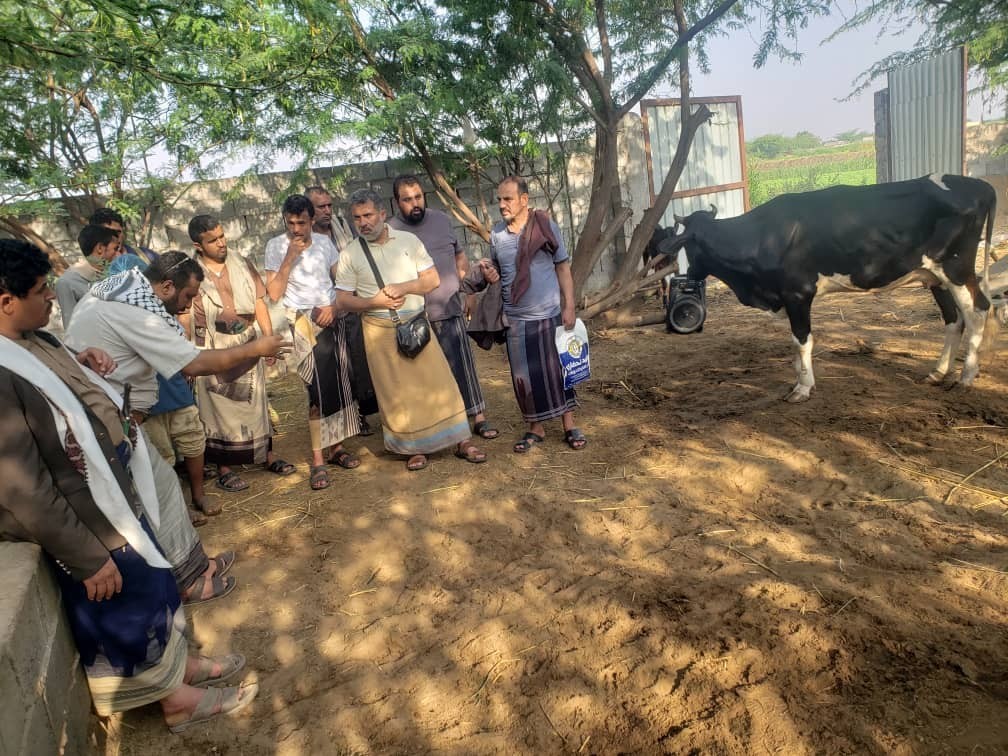
Engineer Abdullah Ahmed Sharaf Al-Din, Executive Director General of the Agricultural and Fisheries Projects and Initiatives Financing Unit in the Capital Secretariat, carried out a field visit to a number of milk collection points in the Al-Durayhimi districts.
Engineer Abdullah Ahmed Sharaf Al-Din, Executive Director General of the Agricultural and Fisheries Projects and Initiatives Financing Unit in the Capital Secretariat, carried out a field visit to a number of milk collection points in the Al-Durayhimi, Al-Mansuriyah and Al-Sokhna districts in Al-Hudaydah Governorate, accompanied by Engineer Muhammad Al-Qahum, Secretary-General of the Agricultural Cooperative Union, Abdul Hafeez Husn, President of the Cooperative Union in the Capital Secretariat, and a number of specialists.
During the visit, Sharaf El-Din was briefed on the progress of work at the collection points, starting with receiving milk from farmers and livestock breeders, through inspection, cooling and storage operations, all the way to transportation and marketing mechanisms, which reflects the integration of the value chain of this vital sector.
Sharaf El-Din stressed that milk assembly projects represent an important model in organizing the dairy production and marketing sector, because of their role in improving the quality of local products, reducing waste, and raising production efficiency, which contributes to enhancing food security.
He pointed out the importance of expanding such successful experiences, and benefiting from their outcomes in developing agricultural and livestock value chains, in order to achieve sustainable economic development, especially in rural and coastal areas.
For his part, Engineer Muhammad Al-Qahum explained that this visit comes within the framework of reviewing the experience of dairy collection points and evaluating their level of performance, stressing that these projects represent a pivotal link in the development of the dairy sector in Yemen.
Al-Qahhoum said: “Establishing milk collection points contributed significantly to organizing the production and marketing process, and opened new horizons for farmers and livestock breeders, by ensuring that their products are marketed at fair prices and improving their quality according to appropriate technical standards.”
He added: "These experiences reflect the importance of cooperative work in developing the agricultural sector, enhancing the efficiency of supply chains, and reducing waste, which supports the trend towards relying on local production."
Al-Qahhoum also praised the level of organization and management at the collection points, stressing that they represent a successful model that can be built upon and generalized in other regions.
In turn, Sharaf El-Din expressed his admiration for the level of performance in these projects, considering it a pioneering experience in empowering the local community, creating job opportunities, and improving the income of productive families.
This visit comes within the framework of a field examination of development experiences in the dairy sector, and an assessment of their impact on improving production and strengthening the local economy.