Yesterday, Thursday, the Agricultural and Fisheries Projects and Initiatives Financing Unit in the Capital Secretariat handed over the site of the project to rehabilitate the wastewater and slaughterhouse waste treatment plant in the central slaughterhouse - Dar Salam in Al-Sabeen District, in preparation for the start of project implementation in accordance with approved studies and designs.
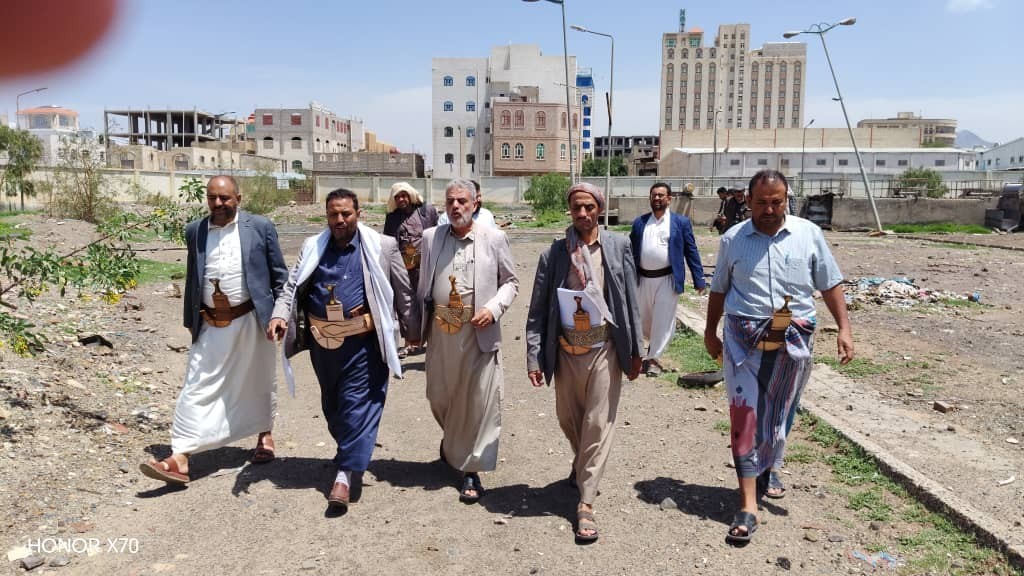
Yesterday, Thursday, the Agricultural and Fisheries Projects and Initiatives Financing Unit in the Capital Secretariat handed over the site of the project to rehabilitate the wastewater and slaughterhouse waste treatment plant in the central slaughterhouse - Dar Salam in Al-Sabeen District, in preparation for the start of project implementation in accordance with approved studies and designs.
The site was handed over to Mohsen Al-Waqidi Contracting Office, at a total cost of 140 million riyals, and with a specific implementation period of six months.
The handover process took place in the presence of a specialized committee headed by the Executive Deputy of the Unit, Mr. Samir Hamza, and the membership of the Director General of the Slaughterhouses Corporation in the Capital Secretariat, Mr. Ahmed Idris, the Director of the Projects and Initiatives Department, Engineer Rashid Al-Hassani, and the Director of the Studies Department, Engineer Issam Al-Faqih, in addition to the engineers supervising the project.
The project is of particular importance as it represents the final link in the chain of development of the slaughterhouse sector, as it aims to treat the waste of the central slaughterhouse in Dar Salam with a capacity of up to 416 heads of cows per day, in addition to calves and sheep, which contributes to reducing harmful environmental impacts, most notably the odors resulting from slaughter waste.
The project also achieves high operational efficiency at a cost not exceeding a quarter of the cost of operating the previous air station, in addition to producing organic fertilizer suitable for agriculture at a rate of two tons per day, and generating biogas with a capacity of up to 181.6 cubic meters per day (equivalent to five household gas cylinders), in addition to making use of treated water for irrigation purposes.
The project consists of an integrated waste treatment system, including a closed anaerobic treatment system (anaerobic digesters), artificial swamps using treatment plants, in addition to sand and carbon filters, and sand drying basins for treating natural sludge.
The unit confirmed that the project comes within its ongoing efforts to support and develop the livestock sector and complete the value chain, noting that it represents the fifth project in a package of projects that were previously implemented, which included rehabilitating and developing the Dar Salam and Nuqum slaughterhouses, modernizing the slaughter halls and their accessories, and supplying equipment, in addition to the feed factory rehabilitation project, leading to the treatment plant project as a final stage that enhances environmental and economic sustainability in this vital sector.